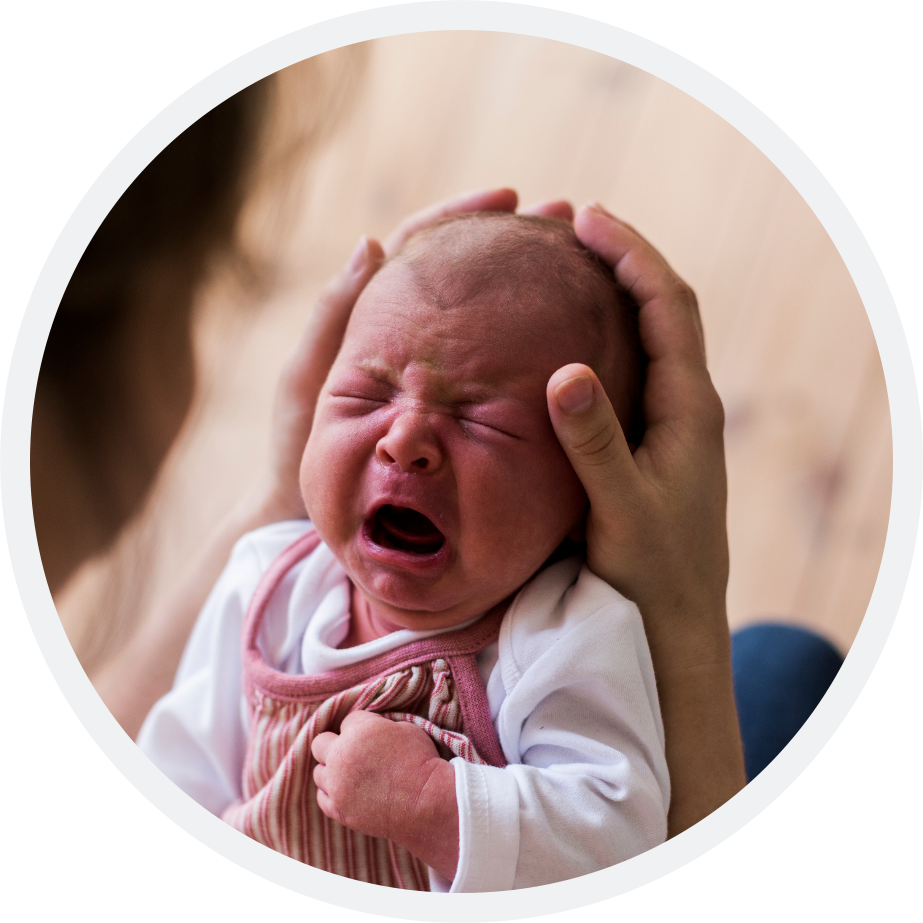
Adverse experiences during infancy, such as maternal depression, exposure to violence, or neglect, can have profound and lasting effects on children throughout their lifetime.
These adverse childhood experiences increase the risk of mental health disorders, chronic diseases, and societal challenges for the child later in life.
These challenges can deny infants and young children the opportunity to thrive throughout their lives and impose substantial economic burdens on healthcare systems and social services.
Pregnancy to Parenthood is dedicated to building strong foundations for lifelong health, development, and wellbeing for babies and young children and their families.
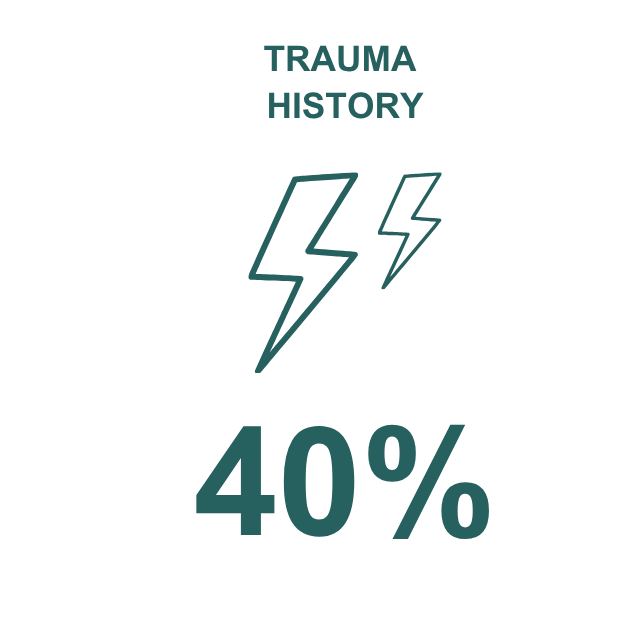
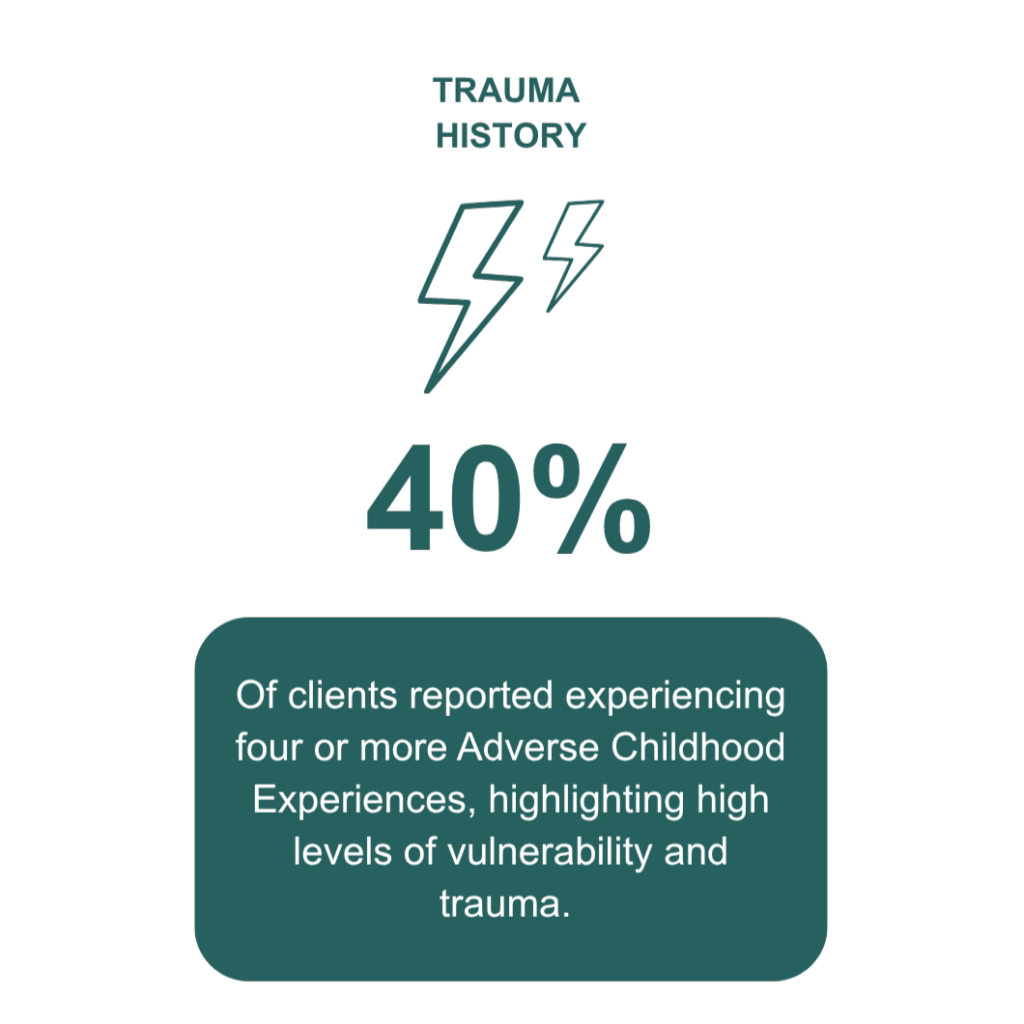
Of clients reported experiencing four or more Adverse Childhood Experiences, highlighting high levels of vulnerability and trauma.
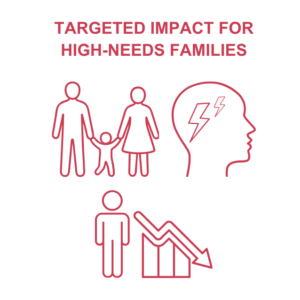
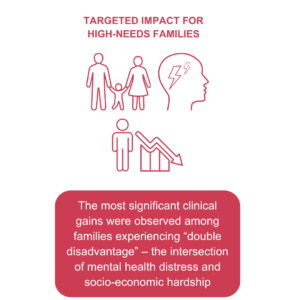
The most significant clinical gains were observed among families experiencing “double disadvantage” – the intersection of mental health distress and socio-economic hardship
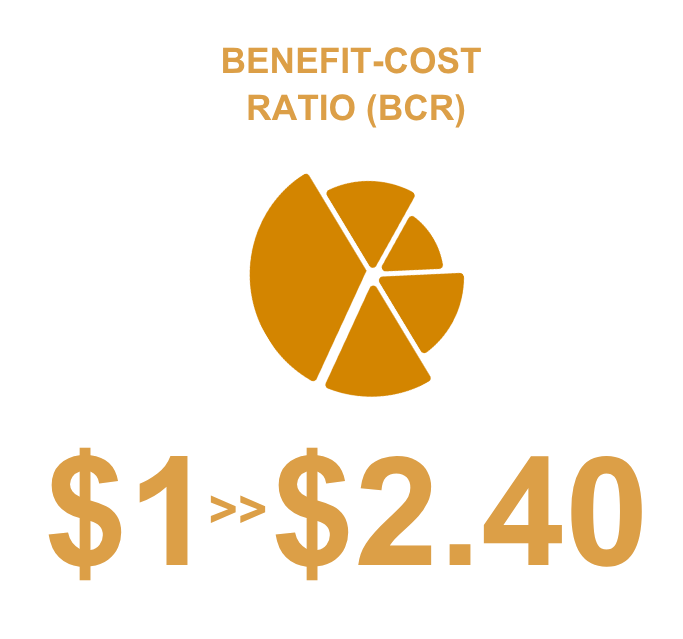
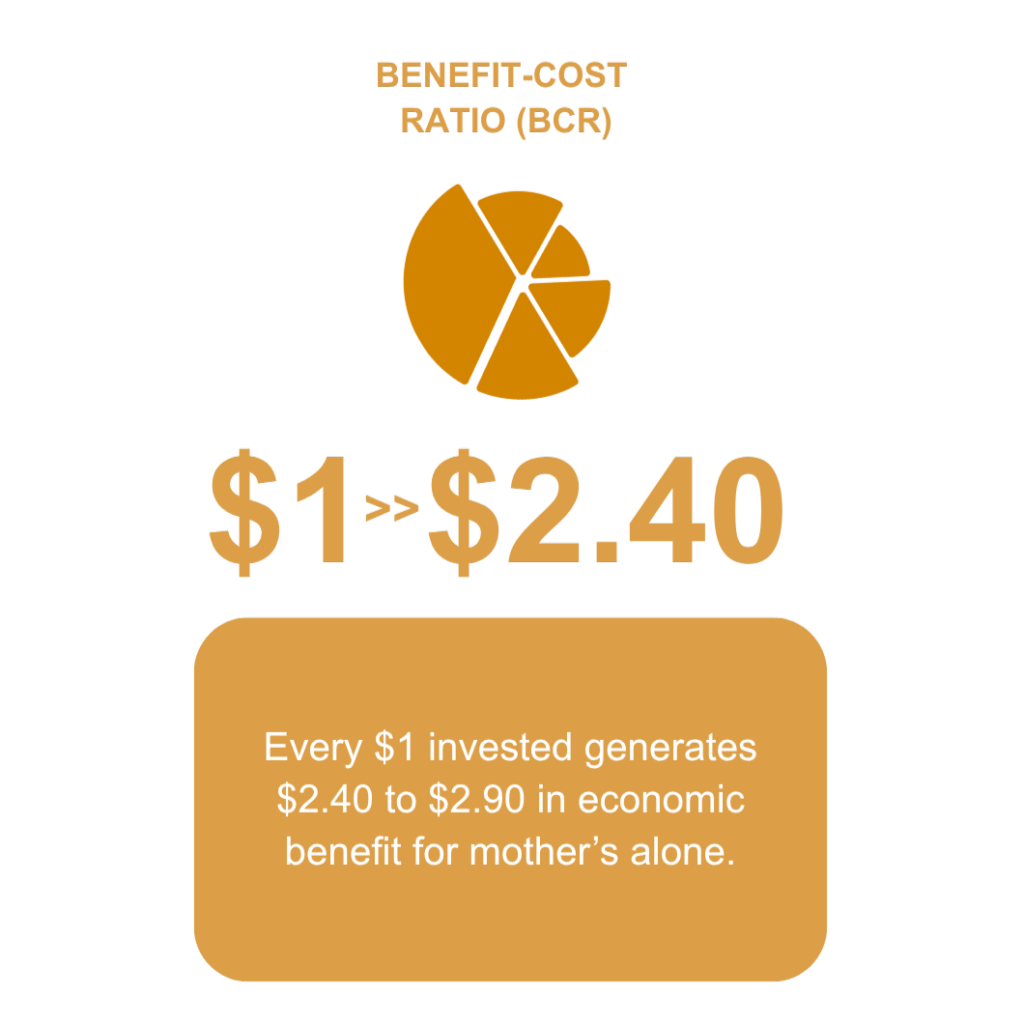
Every $1 invested generates $2.40 to $2.90 in economic benefit for mother’s alone.
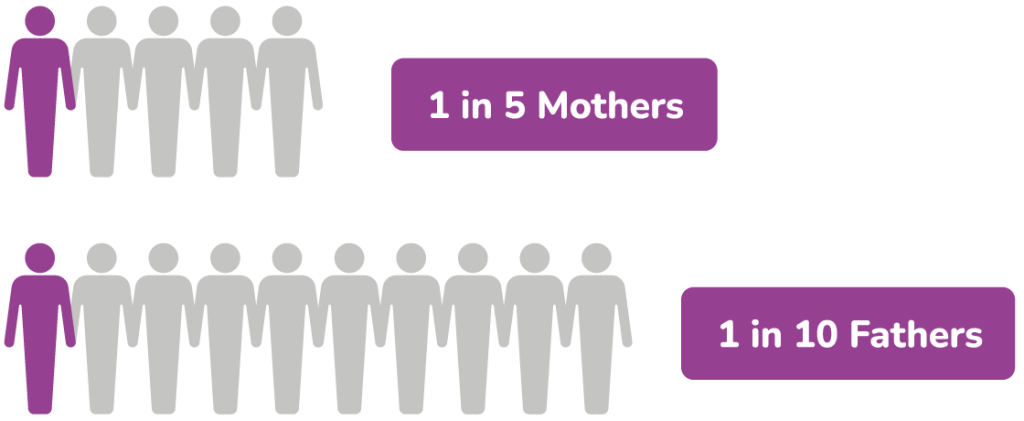
As many as 1 in 5 Australian mothers and 1 in 10 fathers will experience perinatal depression or anxiety 4
24% of WA children
Are developmentally vulnerable on on one or more areas of their development (AEDC domains) and 12.6% are developmentally vulnerable in two or more areas of their development (AEDC domains) 5
Less than 1% 1
Children in Australia aged zero to four years received a mental health service. Yet 15% of babies show emerging mental health concerns.
In 2019 alone, the two most common perinatal mental health conditions, depression and anxiety, are estimated to have cost
A$877 million 2
Increased risk of developing depression, anxiety, and ADHD in children of parents with perinatal depression or anxiety has an estimated lifetime cost of
A$5.2 billion 3
Australia’s parent and infant health system currently has:
A critical gap in the mental health system with a lack of innovative and evidence-based clinical programs for targeted parent and infant mental health support for the most vulnerable families
Inconsistent spread of existing funding both across and within States and Territories and many rural and regional areas have no access to services at all
Workforce shortages in mental health forecast to grow to 40% by 20306 with severe shortage of dedicated and specialised practitioners in Australia
Investing in parent and infant mental health early makes a collective impact through:
Every A$1 of investment in mental health prevention yields up to A$4.927 in savings to the community
Investing in programs such as Child Parent Psychotherapy has a 96% chance of producing benefits greater than the program cost8
A baby's mental health is tied to the world around them, more than at any other time in their lives.
[1] Segal, L, Guy, S, Furber, G. (2018). What is the current level of mental health service delivery and expenditure on infants, children, adolescents, and young people in Australia? Australian & New Zealand Journal of Psychiatry, Vol.52; [2] 163-172; 2 PwC Consulting Australia. The cost of perinatal depression and anxiety in Australia. November 2019; [3] PwC Consulting Australia; [4] Australian Early Development Census; [5] Australian Early Development Census (AEDC) 2024; [6] Department of Health and Aged Care. National Mental Health Workforce Strategy 2022-2032; [7] Oppenheim et al 2022 referencing Washington State Institute for Public Policy, Benefit-cost results. Based on exchange rate of US$1:A$1.49 as of 22 July 2024; [8] Oppenheim et al 2022 referencing Washington State Institute for Public Policy. Child-Parent Psychotherapy. 2019